Summer in Pakistan creates serious challenges for businesses handling frozen and perishable food products. In cities like Karachi, where temperatures and humidity remain high for long periods, maintaining safe food temperatures becomes difficult during storage and transportation.
This problem becomes even more critical during Eid al-Adha, when supermarkets, NGOs, caterers, meat suppliers, and Ijtimai Qurbani organizers manage large quantities of meat within a very short time. Without proper cold chain systems, food can quickly lose freshness, hygiene, and commercial value.
This is why dry ice solutions are increasingly used across Pakistan for frozen food preservation, transport, and especially for bulk Qurbani meat transport by dry ice.
What makes dry ice effective for bulk food storage?
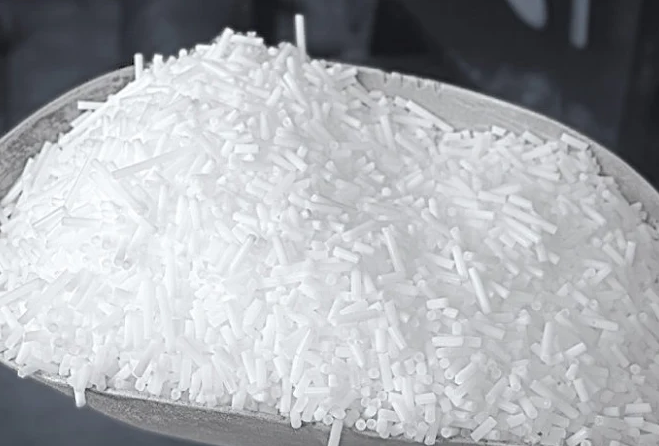
Dry ice is highly effective for food freezing because it maintains an extremely low temperature of −78.5°C. Unlike regular water ice, dry ice does not melt into liquid. Instead, it converts directly into gas through a process called sublimation.
This scientific property makes dry ice ideal for commercial food preservation. Since no water is produced, food remains dry, hygienic, and protected from moisture contamination during storage and transportation.
For businesses handling frozen foods in bulk, this creates a major advantage. Packaging stays clean, product quality remains stable, and cold chain performance improves significantly during Pakistan’s summer season.
Why is dry ice better than regular ice for food freezing?
Traditional ice is commonly used for cooling, but it creates several problems in commercial food operations. As regular ice melts, water accumulates around food packaging, increasing moisture and contamination risks. This becomes especially problematic during transport and large-scale storage.
Dry ice eliminates these issues because it provides moisture-free cooling. It also lasts longer and delivers much stronger freezing performance compared to normal ice.
For frozen meat, seafood, dairy products, desserts, and temperature-sensitive foods, dry ice solutions provide more reliable preservation and safer handling conditions.
How does dry ice help in bulk Qurbani meat transport by dry ice?
Bulk Qurbani operations across Pakistan process and distribute thousands of kilograms of meat during Eid ul Adha. In hot weather conditions, maintaining low temperatures during packing, storage, and delivery becomes essential.
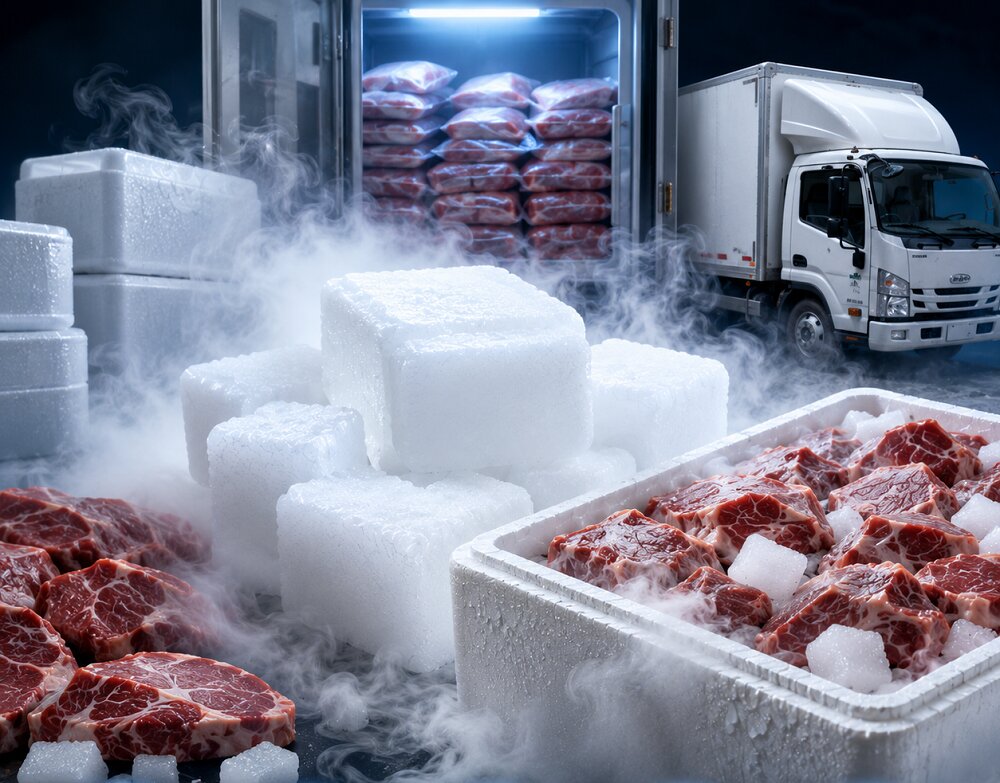
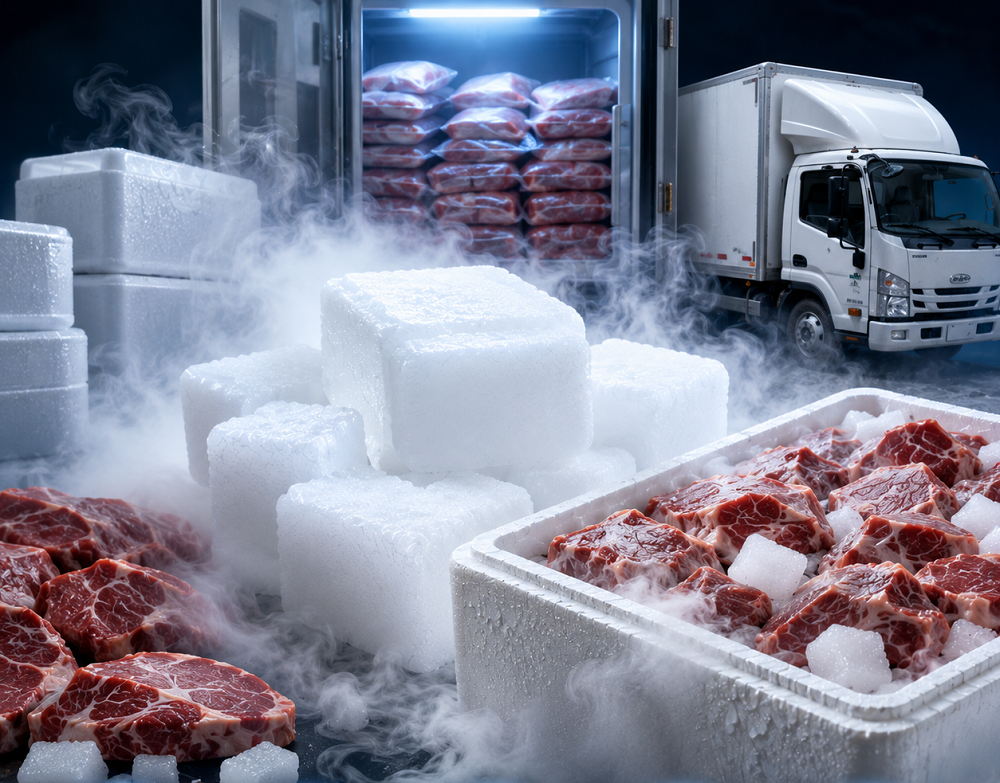
Bulk Qurbani meat transport by dry ice helps preserve qurbani meat quality by keeping temperatures consistently low without creating water leakage inside packaging.
This is especially useful for:
- Ijtimai Qurbani programs
- NGO meat distribution
- Supermarket and hypermarket supply chains
- Intercity frozen meat delivery
- Large-scale charity operations
Because dry ice maintains frozen conditions for extended periods, it supports reliable cold chain logistics even during delayed transport schedules or long-distance deliveries.
How to freeze meat by dry ice safely?
Freezing meat by dry ice requires proper handling and packaging procedures. Fresh meat should first be cooled after slaughter before being packed into food-grade airtight packaging.
The packed meat is then placed inside insulated containers or thermocol boxes with dry ice surrounding the packages. This rapidly reduces the temperature and helps preserve freshness without exposing the meat to water or excess moisture.
This method is widely used in Pakistan for:
- bulk Qurbani meat preservation
- frozen meat transport
- seafood delivery
- commercial food storage
- emergency cold chain support
For large-scale meat operations, dry ice improves both hygiene and operational efficiency.
Why is dry ice important for frozen food transportation?
Transporting frozen food in Pakistan is difficult due to traffic congestion, long travel distances, and extreme summer heat. Even short disruptions in cooling can damage food quality.
Dry ice acts as portable cold chain support because it maintains freezing temperatures without requiring continuous electricity during transportation.
This makes it highly useful for:
- frozen food delivery
- meat export shipments
- catering logistics
- seafood transportation
- dairy product distribution
- intercity frozen meat supply
Businesses use dry ice solutions to maintain safe temperatures until products reach their destination.
Which industries use dry ice for food freezing in Pakistan?
Many industries across Pakistan now rely on dry ice for food preservation and logistics. Restaurants, supermarkets, meat suppliers, pharmaceutical companies, exporters, and event catering businesses regularly use dry ice solutions during summer.
During Eid ul Adha, demand increases significantly due to bulk meat processing and distribution requirements. NGOs and welfare organizations also use dry ice to maintain hygiene and freshness during Qurbani meat delivery.
The growing need for reliable cold chain systems has made dry ice an important part of commercial food logistics in Pakistan.
Why are dry ice solutions becoming popular in Karachi?
In Karachi, high humidity and extreme heat create additional challenges for frozen food businesses. Large population density and growing demand for food delivery services also increase pressure on cold storage systems.
Dry ice solutions provide flexible and fast cooling support for businesses operating under these conditions. Whether the requirement is frozen food storage, meat transport, or large-scale Eid operations, dry ice improves preservation performance while reducing contamination risks.
This is one of the main reasons why businesses increasingly prefer dry ice over traditional cooling methods.

Where to get dry ice for food freezing and Qurbani meat transport?
For premium dry ice solutions in Pakistan, KarachiDryIce.PK provides reliable supply for commercial food storage, frozen transportation, and bulk meat preservation.
Their services support:
- frozen food businesses
- meat suppliers
- supermarkets
- NGOs and welfare organizations
- catering companies
- large-scale Eid ul Adha operations
They provide bulk dry ice supply, thermocol packaging solutions, and cold chain support across Karachi and other regions of Pakistan.
Final Thoughts
Bulk food storage during summer in Pakistan requires stronger cold chain systems than traditional cooling methods alone can provide. High temperatures, transportation challenges, and large-scale food handling increase the need for reliable freezing solutions.
Dry ice provides one of the most effective methods for commercial food preservation because it delivers powerful cooling without moisture contamination. From frozen seafood and dairy products to bulk Qurbani meat transport by dry ice, modern food logistics increasingly depend on dry ice technology for safe and hygienic operations.
For businesses managing frozen food during summer and Eid ul Adha, dry ice has become an essential cold chain solution for maintaining quality, freshness, and reliability.